Blue Skies Over Mastodon - Erin Kissane »
I—a nerd—actually really like Mastodon most of the time, but I would like it so much more and feel like it was doing a lot more good in the world if it were more welcoming and easier to use. When I raise these points on Mastodon, I get a steady stream of replies telling me that everything I’m whining about is actually great, that valuing a “pleasant UI” over the abstraction of federation is shallow and disqualifying, and that that people who find Mastodon difficult don’t belong anyway, so I should “go join Spoutible” or whatever.
And of course this stuff shows up in much worse ways for at least some Black and brown people on Mastodon.
I hate it that I can’t in good conscience encourage Black friends to get on Mastodon, because I know they’re going to be continuously chided by white people if they mention race or criticize anything at all about Mastodon itself. I hate that “a difficult sign-up process keeps out lazy people with bad culture” is a thing in so many Mastodon conversations. (Fun fact, if you hold this idea up to your ear, you can hear them say “sheeple.”)
I feel like Mastodon is a return to the internet of the 2000s, both for good and bad. It’s decentralised, and not owned by a billionaire whose sole metric is “engagement”. But also its interpersonal frictions are like being on Livejournal as a teenager with mods constantly sub-tooting their ongoing dramas and it’s exhausting keeping up with it all. Worse is the old guard of Mastodon who refuse to see the problems with their platforms. I had hoped that the influx of genpop using it in a non-standard way would reluctantly drag the platform into addressing some of its problems (e.g. grassroots quote-toots, even if the software doesn’t actually offer that functionality) but I really don’t know if that’s actually going to happen now.
# May 1, 2023Best Printer 2023 Just Buy This Brother Laser Printer Everyone Has Its Fine - The Verge »
This is how you write a buyer’s guide in 2023.
# Mar 16, 2023And here’s 275 words about printers I asked ChatGPT to write so this post ranks in search because Google thinks you have to pad out articles in order to demonstrate “authority,” but I am telling you to just buy whatever Brother laser printer is on sale and never think about printers again.
Why Everything You Buy Is Worse Now
Or, if you don’t like Vox’s video essays, you can check out the article that inspired it.
tl;dw: companies cheap out on products because the cost of everything (labour, materials) has risen and as consumers we probably wouldn’t pay a fair market price.
Four Thousand Weeks »
I’m currently reading the Oliver Burkeman book about time management and this is a lovely summary/tribute.
# Feb 7, 2023The Fail Whale Cascade »
I’m on Mastodon, but I’m bored of what I call “the timeline era”. Scanning an unending stream of disconnected posts for topics of interest is no longer fun, I prefer deciding what to read based on titles, or topic-based discussion.
I’ve enjoyed the freshness of Mastodon. I really liked starting with a blank slate on a smaller social network. But as things have gotten bigger there, I’m finding Mastodon is starting to exhaust me just like Twitter used to. I guess I just don’t have the energy to stay connected to the firehose of the unconnected thoughts of strangers.
# Feb 7, 2023The Honest Broker - Did the Music Business Just Kill the Vinyl Revival »
A great essay about how the vinyl resurgence appears to be cresting because of the greed of the music industry. Interesting fact I learned from this – only half of the people buying vinyl actually own a record player. I mean, I’ve bought a few records I’ve never actually put on my player because I streamed the album so much and wanted to support the artist. But even still, 50% is staggering.
# Jan 31, 2023My Year in Films 2022
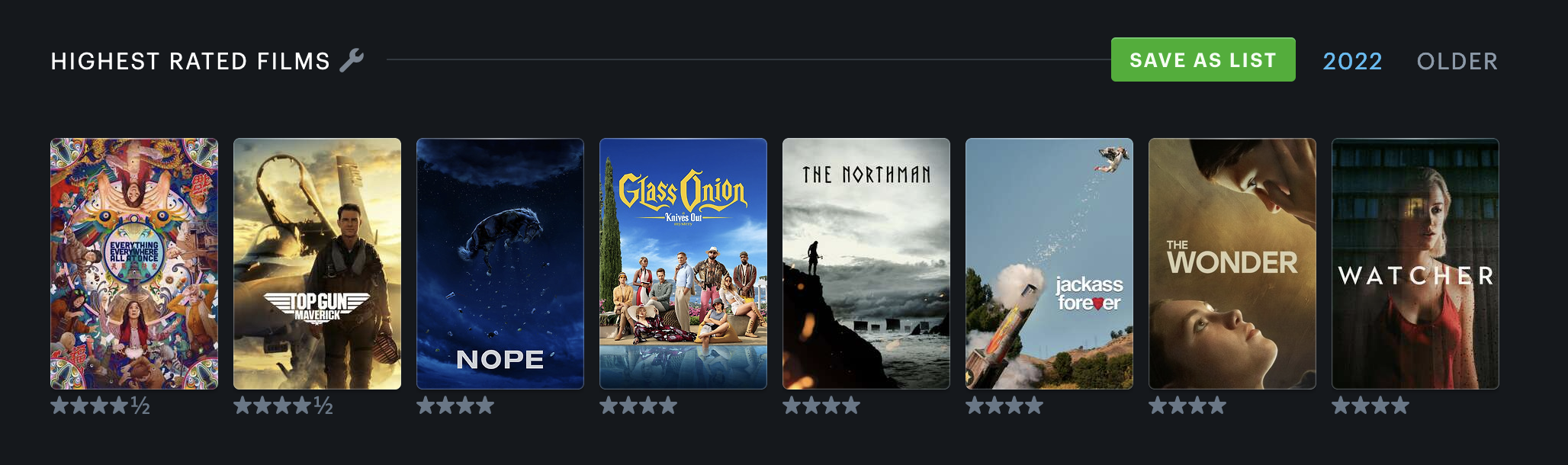
Letterboxd have released their 2022 year in review. I love these roundups because they’re usually pretty great at bubbling up some gems. It’s not any one person or publication’s opinion of the top films of the year, it’s aggregate opinions across the kinds of people who like to track their film-watching across the year. Well, I’m one of those kinds of people, so it’s probably a good time to look at my own stats for 2022. I logged 115 films in 2022. The second-highest number of films in a year since I started tracking this a decade ago. Although technically I watched more because I don’t count the films that I watch (and rewatch, and rewatch) with my kids because that feels like I’d just be cheating my numbers.
Here are my highest-rated films that I watched in 2022 that were released 2022:
And here are my highest-rated films that I watched in 2022 from earlier:
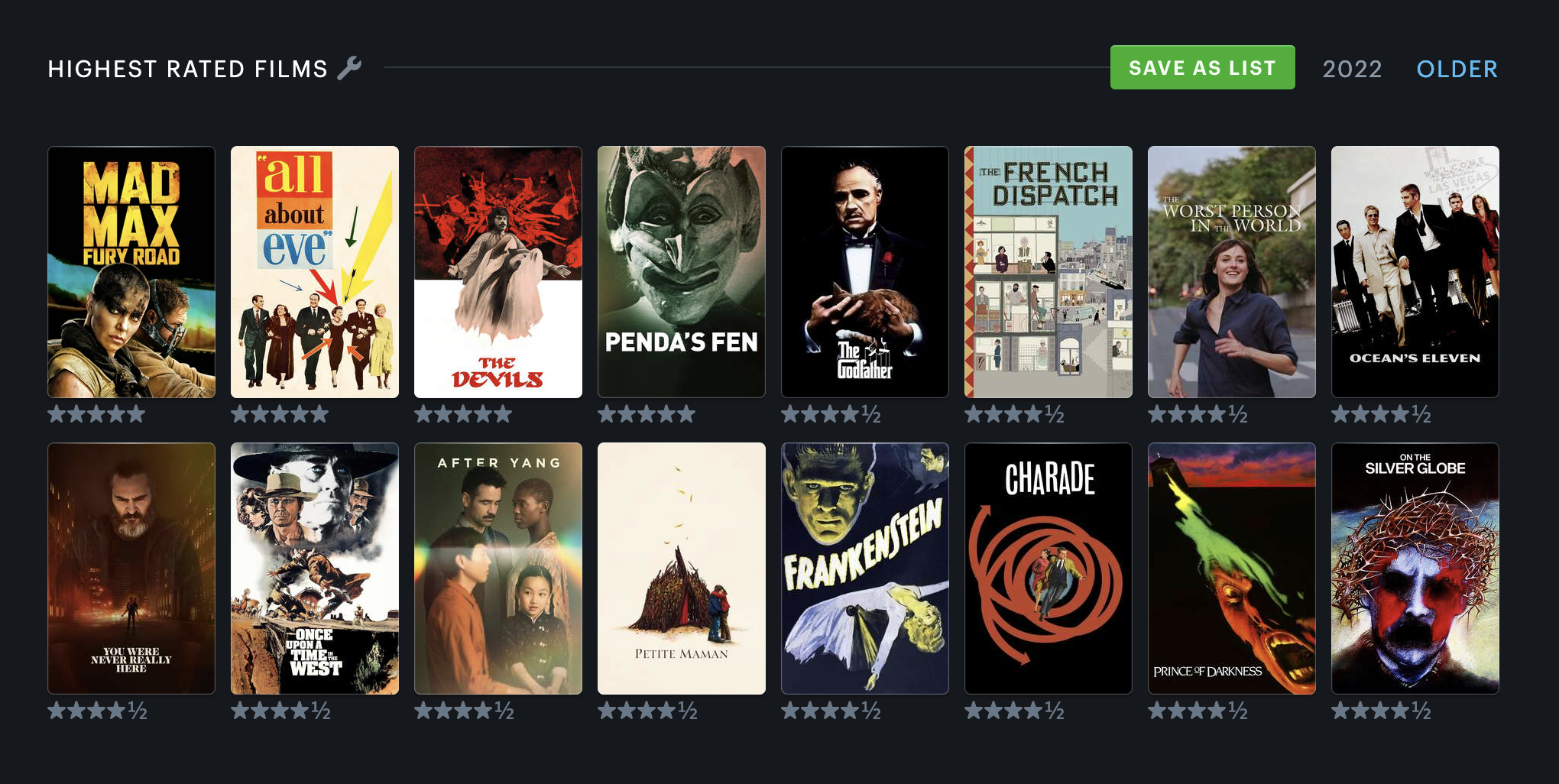
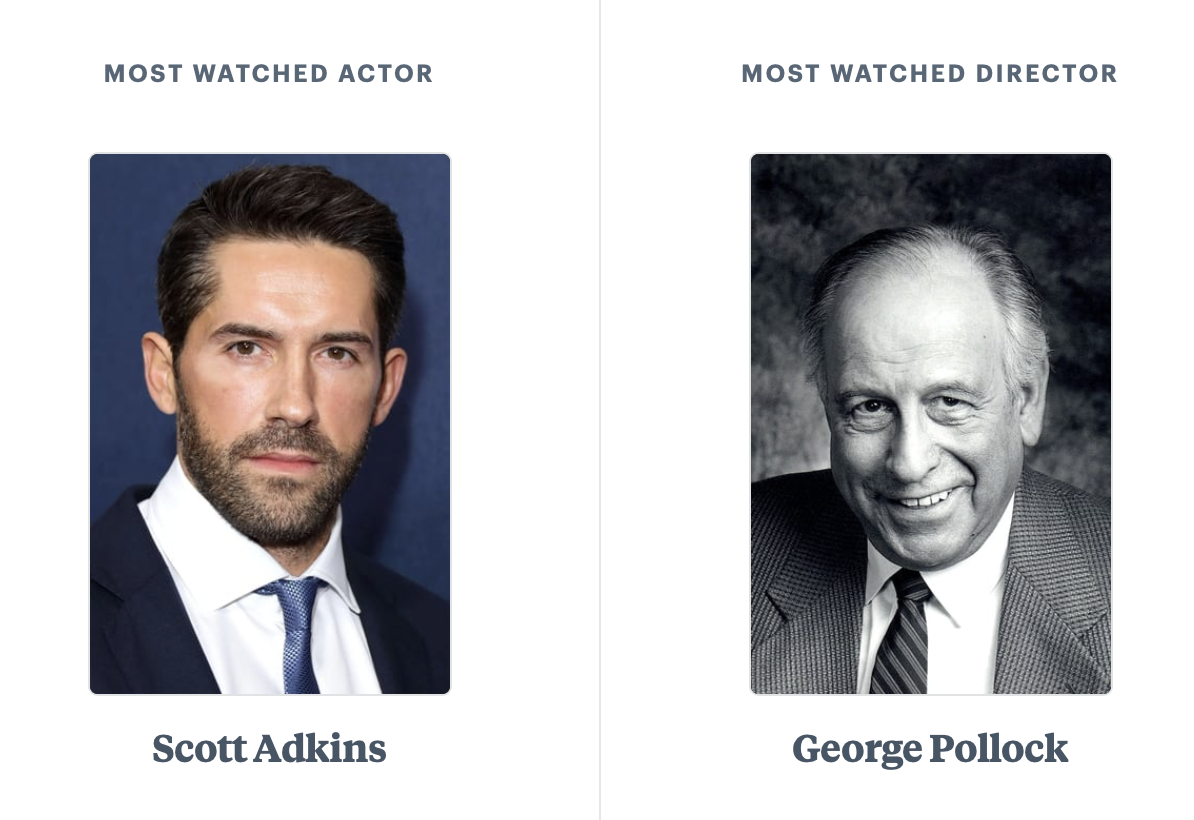
Most of these were first-watches for me, trying to close out some obvious blindspots (I’m in my 40s and had never seen Once Upon a Time in the West). Penda’s Fen was a real standout. I watched this as part of Severin Films’ incredible box set of folk horror because it’s got some great extras, but you can just check it out for free on YouTube right now (and you should). Apparently my most-watched actor in 2022 was Scott Adkins, the best stunt-actor working today. But my most-watched director is George Pollock, a man mostly known for directing cozy Agatha Christie adaptations.
I contain multitudes, I guess.
Anyway, you should follow me on Letterboxd.
# Jan 6, 2023Riding Japans 7 Star Luxury Sleeper Train Seven Stars in Kyushu
Solo Solo Travel is one of my favourite YouTube channels to watch before bedtime. It’s a type of ASMR, I guess, like a soothing digestif to help me wind down for sleep – mostly-wordless videos of someone traveling around Japan on various forms of transport. The thing I love most about the videos are the captions the filmmaker has added to describe what they’re doing/seeing. This person is an underrated comedy genius. Perfect timing, perfect phrasing. My wife and I watched this one the other night, where the person is traveling around one of Japan’s islands on one of the most exclusive trains in the world (pretty niche content!) and belly-laughing our way through the entire thing.
Bring Back Personal Blogging - The Verge »
At the end of the day, we don’t know what is going to happen next with Twitter or any of these platforms. We don’t know what changes Web 3.0 is going to bring to the internet. We do know that we will all still be here, wanting to share our thoughts, talk about anything and everything, and commune with our people. Personal blogging is the simplest and fastest way to do all of that.
I don’t know if blogging is as easy as The Verge are making out in this article. They talk about owning your own platform so that you can be sure that your content won’t go away. But to do that, you really need to host your own blog, and that brings its own set of headaches (Ask me what my backup strategy is for this blog! Ask me if it’s something I worry about!) And toxic social media has made me extremely reluctant to share intimate details of my life on the internet. And the whole rise of AI has made me extremely wary of contributing anything to the corpus of things that will help train them.
But, all that being said, it’s a noble goal. Godspeed.
# Jan 1, 2023Polygon Announce a Making of Spycraft Documentary »
Oh wow! Spycraft was one of my favourite games of the 90s but it’s been pretty well forgotten by most people, despite the fact it did some really interesting things both narratively and gameplay-wise. And it had Charles Fuckin Napier!
So fair play to Polygon for going back and revisiting it now for a making-of documentary that sounds like it’s been in the works for a while. The documentary is coming in 2023 but you can watch the trailer now. And if you want to play the game, it’s available from Steam and GOG and it runs pretty well in Dosbox, even on a Mac.
# Dec 13, 2022